
RTA technical test, history report or pre-purchase inspection?
These answer different questions. RTA describes its technical inspection as a roadworthiness check for licensing purposes. An independent pre-purchase inspection helps you evaluate the condition and likely repair questions before buying. A passing certificate does not replace agreeing the checks you need for that purchase.
Swipe sideways to compare all columns.
| Check | Main purpose | What to arrange |
|---|---|---|
| RTA technical inspection | Roadworthiness for the relevant registration, renewal or export process. | Use an RTA-approved testing centre and check the current appointment requirements. |
| Technical Vehicle Status Report | Available historical vehicle information. | Obtain the owner’s consent and review the report’s coverage and limitations. |
| Independent pre-purchase inspection | Observed condition and repair questions within an agreed scope. | Confirm access, included systems, written findings and any further diagnosis with the workshop. |
Sources: RTA vehicle inspection · RTA Technical Vehicle Status Report
A vehicle history report is not proof of no accidents
RTA states that its Technical Vehicle Status Report does not include vehicle accident data. It also notes that records may be incomplete and recommends an inspection and test drive before a purchase decision. Ask the seller for available repair and maintenance records, then compare them with the physical findings. An absence of recorded damage is not proof that damage never occurred.
Sources: RTA report coverage and limitations
Identity and document checks
Match the VIN on the vehicle with the registration and the documents presented by the seller. Use current official UAE and emirate channels for ownership, registration, finance, fines, testing and transfer requirements. Do not send unredacted identity or finance documents through an open website form.
Body and accident indicators
Look for inconsistent paint finish, overspray, uneven panel gaps, repair marks, glass differences and tyre-wear patterns. These observations are not a final structural conclusion; they identify where a workshop inspection should look more closely.
Mechanical, electrical and AC scope
Agree whether the inspection includes warning lights, fluid condition, leaks, cooling, brakes, steering, suspension, tyres, AC operation, electrical functions, diagnostic scan and an appropriate road test. A fault-code scan alone does not prove the rest of the car is healthy.
Turn findings into a decision
Ask for a written summary that distinguishes observed condition, recommended further diagnosis, maintenance due, repair risk and items outside the inspection scope. Active Auto pre-purchase inspection starts from AED 350; confirm the vehicle-specific coverage before booking.
Compare the scope before comparing the inspection price
Ask which checks can be completed on this vehicle and what permission or access is needed from the seller. These are questions to agree before booking, not a promise that every procedure is included in the starting price.
Swipe sideways to compare all columns.
| Area | What to ask for | Limit to record |
|---|---|---|
| Service history | Available invoices, mileage and dated maintenance records | Missing records are not proof of completed maintenance. |
| Body and underside | Observed damage, repair indicators and access for inspection | Unseen areas and dismantling exclusions should be stated. |
| Diagnostics and functions | Systems scanned, stored faults and functions checked | A clear scan does not rule out every fault. |
| Road test | Whether permission, insurance and vehicle condition allow a test | If no road test is performed, record that limitation. |
| Follow-up work | Separate maintenance items, repair estimates and further diagnosis | An inspection price is not a repair quote. |
Arrange the seller, workshop and vehicle transport
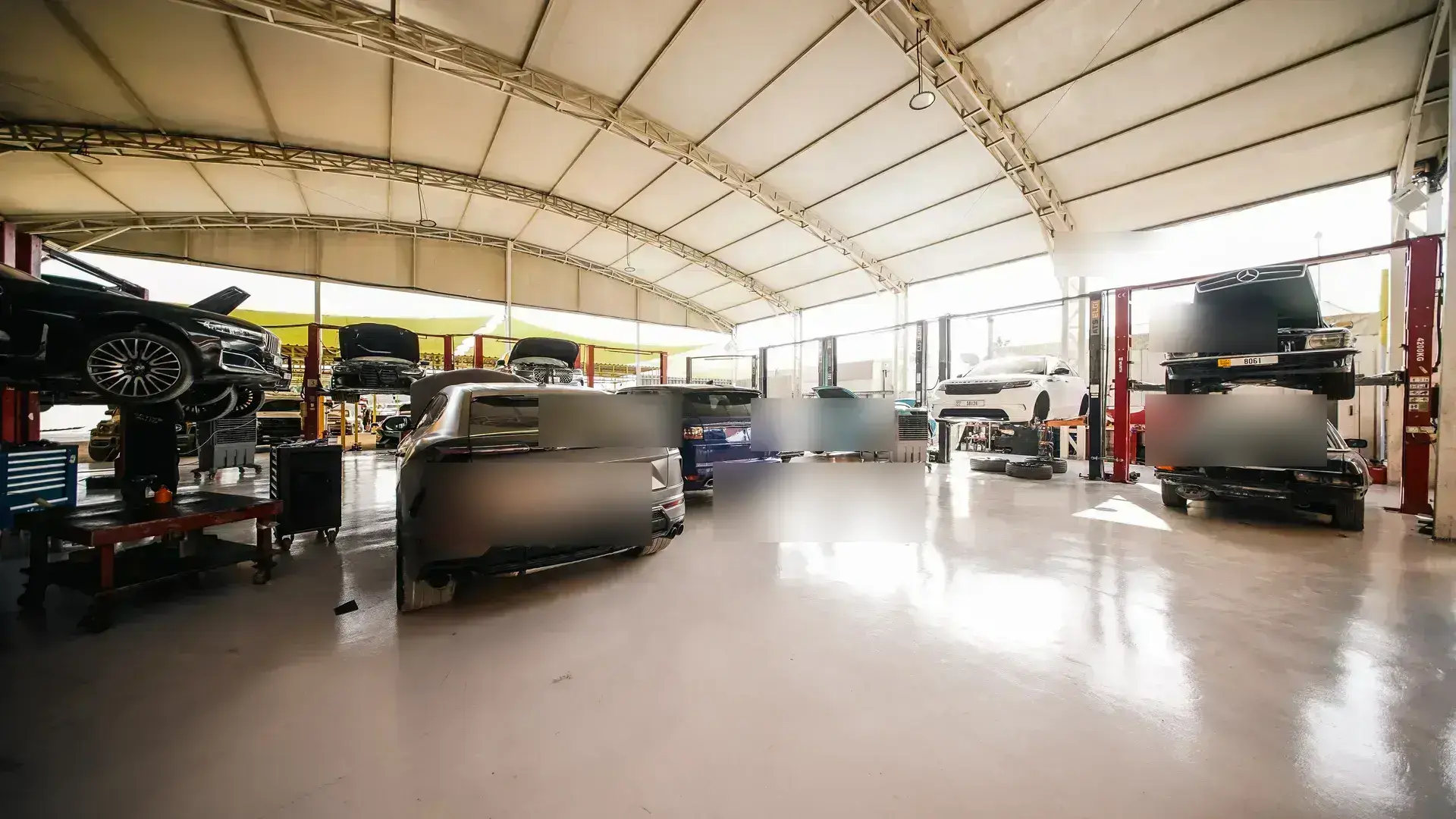
Send the make, model, year, mileage and the seller's available appointment times before booking. Inspection work is carried out at Active Auto's Al Quoz workshop. Pickup and drop-off can be arranged across Dubai and other UAE emirates; confirm the seller's permission, timing and any charges individually. Do not assume an inspection can be completed at the seller's address.
Still Not Sure? Just Ask.
Send the make, model, year, symptom and any useful photos. The team will explain what needs checking and what to include in a quote for your car.
Frequently asked questions
When should I inspect a used car?
Before payment and transfer, while the findings can still support negotiation or a decision to walk away.
Does a clean diagnostic scan prove the car is good?
No. It is one evidence source. Body, mechanical, electrical, AC, tyre, brake, history and road-test findings can reveal different risks.
How much does Active Auto pre-purchase inspection cost?
The verified starting price is AED 350. Confirm the exact vehicle and inspection scope before booking.
Does an inspection guarantee the car will not fail later?
No. It reports the agreed checks and observable condition at the time. Hidden, intermittent or future faults cannot be universally guaranteed.
Can you collect the seller's car for an inspection?
Ask about pickup and drop-off and obtain the seller's permission first. The appointment, location, timing and any transport charges must be agreed; the inspection happens at the Al Quoz workshop.
Does an RTA test replace a pre-purchase inspection?
They serve different purposes. Use the required RTA testing route for licensing and agree a separate condition-check scope for the purchase decision. Active Auto’s workshop report is not an RTA technical inspection certificate.